It is 7:15 on a Tuesday. You have forty seats, and eleven people in them, and two of those are regulars.
Two years ago you paid somebody $4,200 for a beautiful video. Slow motion, a voiceover about passion. It lives on your homepage and has never once been the reason a person walked through your door. You know that because nobody has ever mentioned it.
The footage was probably fine. Most restaurant video marketing fails after the shoot, not during it. Nobody decided what the video was supposed to sell, nobody cut it into the thirty pieces it should have become, and nobody put those pieces where hungry people actually look.
This guide covers the part that gets skipped. What to film, how a shoot day should be structured so it produces a month of content instead of one film, where each clip goes, what it costs, and how to tell whether any of it made you money.
Why restaurant video marketing works when almost nothing else does
People do not decide where to eat by reading. They decide while scrolling, usually between 4 pm and 6:30 pm, usually already hungry, usually within ten minutes of picking a place.
TouchBistro's 2025 American Diner Trends Report, run with The Harris Poll across 1,500 U.S. diners, found 67% of Gen Z have used social media to decide on a restaurant. Wyzowl's 2026 State of Video Marketing report found 63% of people would rather watch a short video than read anything else to learn about a business. BrightLocal's 2025 Local Consumer Review Survey found 87% of consumers used Google to evaluate a local business, which is where your Google Business Profile is doing quiet work you never see.
A short video answers the only two questions in a hungry person's head. Does that look good, and is it close? A menu PDF answers neither.
There is a second reason, more useful to you. Short-form video for restaurants is the one channel where a single location beats a chain. You have real hands, a real kitchen, and a dish that looks better in fourteen seconds than anything a corporate team approves in six weeks of review. HubSpot's 2026 State of Marketing report has 49% of marketers ranking short-form video as their highest ROI format. You already own the raw material.
The five types of restaurant marketing videos that bring people in
Not every idea is worth a shoot day. These five are, roughly in order of how fast they pay.
-
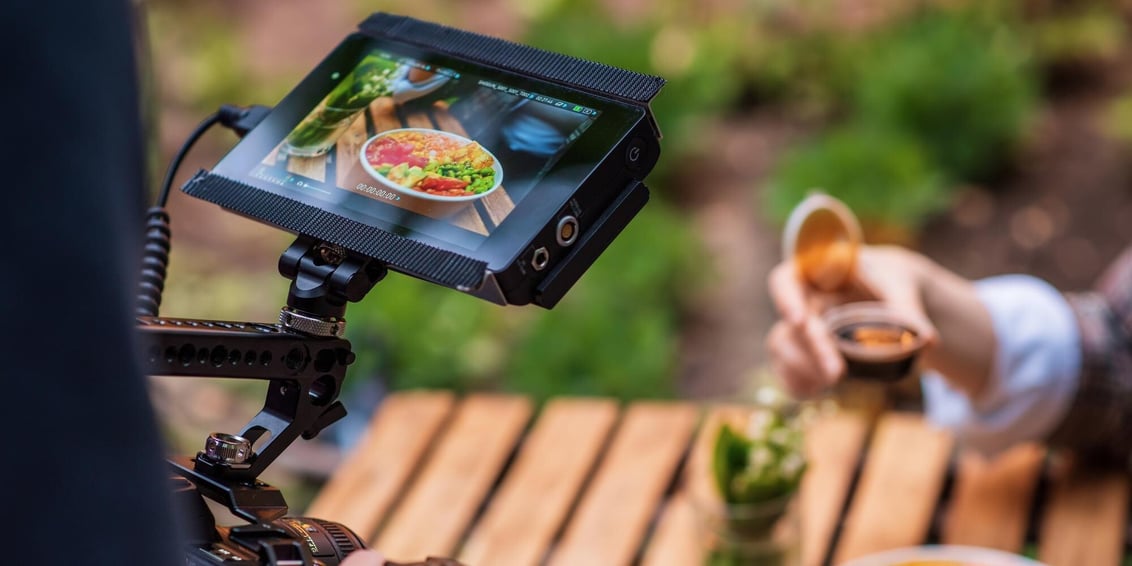
The single dish, shot close and short: One plate, one angle, seven to fifteen seconds. A cheese pull, a pour, a knife through crust, sauce hitting a hot pan. Post to Reels, TikTok, and YouTube Shorts. Expect it to move that item. A pizzeria in Ohio ran one honey-drizzled pepperoni pie three times over five weeks and watched it go from slow seller to top three. Name the dish on screen and in the caption.
-
Behind the scenes and prep: Fifteen to thirty seconds of dough being shaped at 9 am, stock going on, the produce delivery being broken down. Restaurant behind-the-scenes video ideas build trust with people who have never eaten your food, which makes them first-visit drivers.
-
Your people. Twenty to forty-five seconds: Your chef explaining why the braise takes six hours. A bartender making the drink everyone orders. These do less for reach and more for repeat visits. Guests who have seen a face ask for that person by name.
-
Guest and user-generated content: The cheapest content you will ever run, because someone else shot it. User-generated content for restaurants works as social proof precisely because it visibly was not made by you. Two ways to get more: a tent card with your handle and one specific ask, and a server line when a photogenic dish lands.
-
The offer video: An LTO, happy hour, a catering package, a game day platter. Ten to twenty seconds, one offer, one CTA, a start and end date. This is the most measurable video you will make and the one that turns a dead day-part into revenue. TouchBistro's 2025 report found 81% of Gen Z diners are motivated by a limited-time offer. Give them one, with a deadline.
Why most restaurant video underperforms
You have probably seen clips of your own food that looked worse than the plate does in real life. There are three reasons, and it is the same three almost every time.
The light came from the wrong place. Overhead restaurant lighting is warm, dim, and lands straight down, which flattens texture and turns white plates yellow. Food needs light from the side to show height, gloss, and steam. That is why a dish that looks incredible on the pass looks grey in a feed, and it is the biggest single difference between footage that sells and footage that sits.
The plate was already dead. Hot food has about ninety seconds on camera. Steam stops, cheese sets, greens wilt. If the shot is still being framed when the plate lands, it is gone. Food shoots get built around that window, which is why plating and shooting are sequenced rather than improvised.
The first three seconds were wasted. Most restaurant clips open on a slow shot of a sign or a room. A scroller is gone by then. The cheese pull goes first and the context comes second, always.
Where to post it and how each platform behaves
Discovery and conversion are different jobs. TikTok and Reels find you, strangers. Google Business Profile and your website turn someone already deciding into a booking. You need both, and the same clip does both.
|
Platform
|
Best for
|
Length
|
What people are doing
|
Realistic expectation
|
|
Instagram Reels
|
Local discovery, repeat exposure
|
7 to 20 sec
|
Half-deciding on dinner
|
Most reach for most restaurants. Slow build, then a clip pops
|
|
TikTok
|
Reaching people who never heard of you
|
10 to 30 sec
|
Entertainment first, food second
|
Highest ceiling, least predictable. TikTok marketing for restaurants rewards personality over polish
|
|
YouTube Shorts
|
Discovery with a long tail
|
15 to 45 sec
|
Searching and browsing
|
Fewer views, but they keep coming for months
|
|
Facebook Reels
|
Locals over 40, catering buyers
|
10 to 30 sec
|
Community groups, local news
|
Underrated for catering leads
|
|
Google Business Profile
|
Conversion. The last thing seen
|
15 to 30 sec
|
Deciding right now
|
Low view counts, high intent. Post weekly
|
|
Website and menu pages
|
Removing hesitation
|
10 to 20 sec, muted
|
Comparing you to two other places
|
Better dwell time, more completed reservations
|
|
DoorDash, Uber Eats, Grubhub
|
Item selection, average check
|
Stills and short clips
|
Ready to buy
|
Moves which items sell. DoorDash led at 73% of diners in TouchBistro's 2025 report
|
|
Email
|
Reactivating people who like you
|
Thumbnail to the clip
|
Not hungry yet
|
Best for LTOs and catering
|
How to know if restaurant video marketing worked
Attribution in restaurants is imperfect. Somebody sees a Reel Tuesday, forgets it, walks in Saturday. Stop trying to trace that. Build two or three signals you can read.
- Featured item sales in your POS. Push one dish for two weeks and compare unit sales in Toast or Square against the two weeks before. The cleanest read you will get.
- A video-only promo code. Make the offer video the only place a code appears. Every redemption is traceable.
- A separate link in bio. A tracking link keeps social orders and reservations separate from normal traffic.
- Google Business Profile insights. Track calls, direction requests, and website clicks once you post video weekly.
- Reservation source tagging. OpenTable and Resy let you tag a source. Add one for social.
- Ask. Put "how did you hear about us" in your reservation notes, and have hosts ask once a shift.
Six mistakes that waste your money
- The four-minute brand film. Nobody watches it, and it cannot be posted anywhere that drives traffic. Make it a byproduct of a shoot, never the point.
- The drone shot of the parking lot. Nobody ever chose a restaurant because of an aerial view of the roof.
- Trending audio with no connection to your food. A trend you cannot tie to a dish or an offer buys views from people 800 miles away. Reach without radius is worthless.
- Posting for three weeks and quitting. The most common failure by a wide margin, and your local audience needs repetition before anything compounds.
- No call to action. Every video needs one line. Order it this week. Book the patio. Catering closes Friday.
- Treating it as a project instead of a habit. A one-time shoot decays in ninety days. A recurring rhythm builds an asset.
Where to start
The restaurants that win at this do not have the best footage. They are the ones still posting in month seven. Most quit in week four, one week before anything works.
So the first decision is not what to film. It is whether this can keep running for a year. Pick the dishes on margin, put one offer on camera with a real deadline, get the clips onto every surface where somebody is already deciding, then check your POS in thirty days on the item you pushed hardest.
If you want a second read on footage you already have, or on a dish list before you book anything, i. No pitch, just an honest take on whether it will sell anything.



 Video Production