


 Video Production
We share what we learn while making video.
If you have been putting off video marketing because it feels expensive, technical, or like something only big brands can afford, the numbers tell a different story. Roughly 9 in 10 businesses now use video as a marketing tool, and 93% of marketers say it is an important part of their overall strategy. Pages with video are far more likely to land on the first page of Google, and something as simple as one well-made explainer video has been shown to lift landing page conversions by double digits.
This guide is written for business owners, not marketing theorists. We will cover what video marketing actually is, the video marketing strategies that actually move revenue, what it realistically costs, and real examples of it paying off. No fluff, no jargon you have to look up.
What Is Video Marketing?
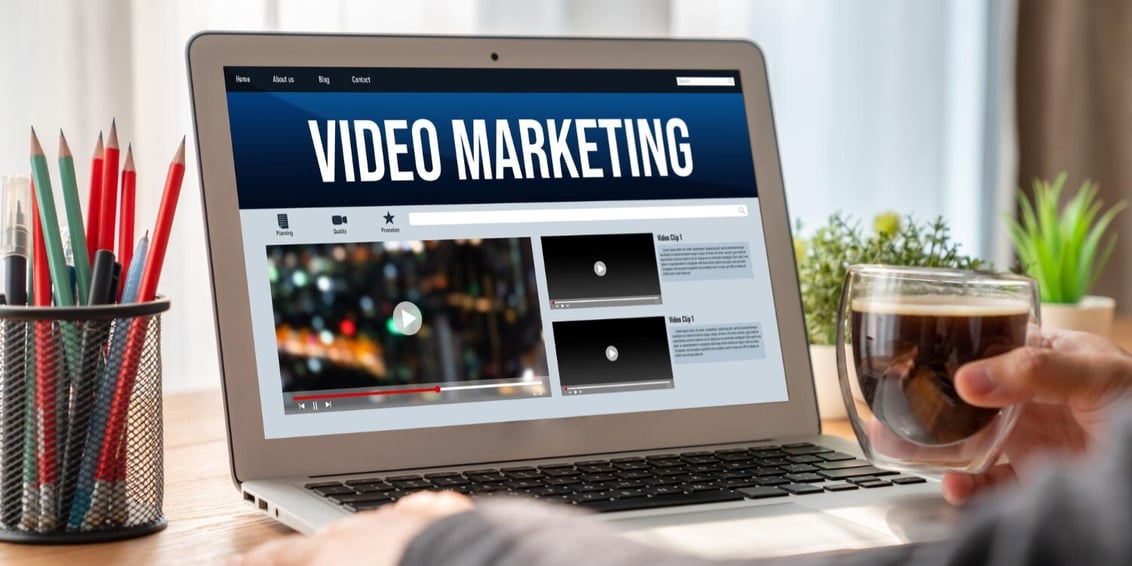
Video marketing is the use of video content to promote your business, build trust with your audience, and move people toward a decision, whether that decision is booking a call, buying a product, or simply remembering your name the next time they need what you sell.
It is a broad category by design. A 15-second Instagram Reel, a two-minute explainer video on your homepage, a customer testimonial, a full product demo, and a 30-second local commercial all fall under video marketing. What connects them is not the length or the platform. It is the goal: using motion, sound, and story to communicate something faster and more persuasively than a paragraph of text or a static image ever could.
For a business owner, that speed and persuasion matter more than they might seem to at first glance. People retain visual information better than text, and they trust what they can see and hear. That is why video marketing has moved from "nice to have" to a baseline expectation for any business trying to compete online.
Why Video Marketing Matters for Your Business
It is easy to treat video as a creative extra, something you get to once the "important" marketing is done. The data suggests the opposite. Video marketing tends to move the metrics business owners actually care about:
-
Trust: A large majority of consumers say video quality directly affects how much they trust a brand. In a market where people research before they buy, video is often the first real impression your business makes.
-
Search visibility: Businesses that use video in their content generate significantly more organic web traffic than those that do not, and pages with video are dramatically more likely to rank on the first page of search results.
-
Conversion: Landing pages with video convert at rates up to 86% higher than pages without one. On product pages, video has driven sales increases in the range of 6% to 30% for retailers who tested it.
-
Lead generation and revenue: Most marketers using video report that it directly helped generate leads and increase sales, and a strong majority say it has delivered a good return on investment.
None of this means every video works. It means video, done with a clear goal, consistently outperforms channels that rely on text and static images alone. That is the case for treating video marketing as a core part of your strategy rather than a one-off project.
Our take, after producing video for clients across dozens of industries: the businesses that get the best return are rarely the ones with the biggest budget. They are the ones who know exactly what one video needs to accomplish before a camera ever turns on.
Types of Video Content Every Business Should Consider
You do not need to produce every type of video to see results. You need the right mix for where your business is and who you are trying to reach.
- Brand story videos: Who you are, why you started, and why it matters to the customer. Ideal for your homepage and about page.
- Explainer and product demo videos: Short, focused videos that show exactly what you offer and how it solves a problem. These are some of the highest-converting video formats because they answer the buyer's question directly.
- Customer testimonial and case study videos: Nothing builds trust faster than a real client explaining, in their own words, why they chose you and what results they got.
- Social media and short-form video: Quick, platform-native content built for Instagram, TikTok, and LinkedIn. Best for awareness and staying visible.
- Paid video ads: Video built specifically for YouTube, Meta, or connected TV campaigns, designed to stop the scroll and drive a specific action.
- Event and behind-the-scenes video: Humanizes your business and gives you content that would otherwise be hard to script.
Most businesses that see strong results are not relying on one type. They are running a mix, matched to where a potential customer is in their decision, from first hearing about the business to being ready to buy.
Video Marketing Trends Worth Knowing About in 2026
A strategy built on old assumptions will underperform, even if the production quality is excellent. A few shifts worth building into your plan:
- AI is now part of production, not a replacement for it. Most video marketers already use AI for tasks like scripting, editing, and captioning. The businesses getting the most out of it use AI to move faster, not to skip strategy or quality control.
- Short-form is not just a consumer trend anymore. LinkedIn has become a serious distribution channel for B2B video specifically, and short, focused videos are outperforming long-form content on engagement across most platforms.
- Company websites remain the single most common place businesses publish video, ahead of email, LinkedIn, and YouTube. Do not treat your own website as an afterthought in your distribution plan.
- Longer content still earns its place. Webinars and extended product demonstrations continue to drive some of the highest conversion rates of any video format, so short-form and long-form should work together, not compete for the same budget.
The point is not that you need every new format or tool. It is that a video marketing strategy deserves a fresh look at least once a year so it reflects how people are actually watching now, not two years ago.
How to Build a Video Marketing Strategy That Works
A lot of businesses jump straight to "let's make a video" without a strategy behind it, which is why so much video content gets produced and then quietly forgotten. A working video marketing strategy starts with the business, not the camera.
- Start with a business goal, not a video idea. Are you trying to generate leads, close more sales calls, build brand awareness, or reduce support questions? The goal decides everything else: the type of video, where it lives, and how you measure it.
- Know exactly who you are talking to. A video aimed at a first-time visitor who has never heard of you needs a different message than one aimed at a lead who is comparing you to a competitor. Write down who you are speaking to before you write a single line of script.
- Map video content to the buyer journey. Early-stage viewers respond to short, engaging content that builds awareness. Mid-stage viewers want explainer and comparison content. Late-stage viewers want proof: testimonials, case studies, and demos. A strategy that only produces one of these leaves gaps in your funnel.
- Choose your platforms on purpose. Company websites remain the top place businesses distribute video, followed closely by email and LinkedIn. YouTube is still the most widely used platform overall, while LinkedIn has become the leading channel for B2B distribution specifically. Pick platforms based on where your actual customers spend time, not where it is trendy to post.
- Plan for a system, not a single video. The businesses that get the most out of video marketing treat it as an ongoing program: a few larger productions per year (brand films, key testimonials, flagship campaigns) supported by a steady stream of shorter, repurposed content. One shoot day can often produce a dozen usable pieces of content if it is planned that way from the start.
- Decide how you will measure success before you publish. Views are the easiest number to track and often the least useful one. Watch time, click-through rate, lead form completions, and sales attributed to video are the numbers that actually tell you whether your video marketing strategy is working.
If mapping all of this out feels like more than you have time for, this is exactly the kind of planning a good video production company should be doing with you, not handing you a video and walking away.
Video SEO: How to Get Found, Not Just Watched
A lot of video marketing advice stops at production and distribution, but a video sitting unwatched on your website or YouTube channel is not doing its job. A few practical steps make a real difference:
- Add full transcripts and captions. Search engines cannot watch a video, but they can read a transcript. Captions also cover viewers watching on mute, which is most of your social audience.
- Write descriptive titles and file names. A file name and title built around what someone would actually search for helps far more than a generic label.
- Host key videos on your own website, not only on YouTube. Embedding video on the page you want to rank keeps visitors on your site longer, which is itself a ranking factor, and keeps full control of the surrounding content with you.
- Use video schema markup. This structured data can help your video show up with a thumbnail directly in search results, which meaningfully improves click-through rate.
- Design a thumbnail worth clicking. On platforms like YouTube, the thumbnail often decides whether someone clicks at all, regardless of how good the title is.
None of this is complicated. It is just frequently skipped, which makes doing it consistently a real advantage over competitors who are not.
What Does Video Marketing Cost? A Realistic Breakdown
This is usually the first question business owners ask, and it is also the one with no single honest answer. The cost of video marketing depends on the type of video, how many you need, the complexity of the shoot, and whether you are producing one project or building an ongoing content library. Two businesses asking for a "commercial" can land on completely different budgets once you factor in scope and deliverables, so a generic price range would not actually tell you much.
Instead of guessing, use our free cost calculator to get a realistic estimate based on your specific project in about two minutes.
Get your video production cost estimate →
The right question is not "what is the cheapest video I can get." It is "what does this video need to accomplish, and what does it take to do that well." The calculator is the fastest way to find out where your project lands.
A few things worth knowing before you budget:
The quoted production price is rarely the full cost of video marketing. Distribution, paid promotion, and revisions beyond the included rounds usually add 20% to 50% on top of the base quote.
Post-production, meaning editing, color, sound, and graphics, typically makes up 20% to 35% of the total budget on professionally produced work.
Cheap video has its own hidden cost. A video that does not represent your brand well, or that never gets watched because it was not planned for the right platform, ends up costing more in wasted time and missed opportunity than a properly planned production would have.
The right question is not "what is the cheapest video I can get." It is "what does this video need to accomplish, and what does it realistically cost to do that well." A conversation with a video production company about your goals and budget will get you a far more useful number than any general price range.
Examples of Video Marketing That Actually Worked
Numbers are convincing, but seeing video marketing work in practice makes the case even clearer. Over the years, we have produced commercials, brand films, and product videos across a range of industries. A few worth watching:
Morelli Heating & Air Conditioning, Inc. New Commercial
Truitt Law Firm Testimonial Video
Common Video Marketing Mistakes to Avoid
- Treating video as a one-time project instead of a channel. A single video, no matter how good, rarely moves the needle the way a consistent presence does.
- Skipping the strategy step. Producing a video before deciding what it needs to accomplish almost always leads to content that looks good but does not perform.
- Ignoring sound-off viewing. A large share of video is watched muted, especially on social platforms. If your message only works with sound on, you are losing a big chunk of your audience.
- Overinvesting in awareness content and underinvesting in decision-stage content. Plenty of businesses have a great brand video and nothing that actually helps a lead say yes.
- Not repurposing footage. A single professional shoot can usually be cut into several pieces of content for different platforms. Producing one video per shoot leaves value on the table.
- Choosing a platform based on trends instead of where your customers actually are.
Choosing the Right Video Production Partner
Most business owners do not have the time, equipment, or in-house expertise to produce video that looks and performs professionally, and that is completely reasonable. The value of working with a video production company is not just the camera work. It is the strategy, the writing, the editing, and the experience of knowing what actually gets watched and what gets skipped.
When evaluating a potential partner, look for:
- A process that starts with your business goals, not just a shot list.
- A portfolio that includes work in or near your industry, so you can see how they have solved similar problems before.
- Clear communication about cost, timeline, and revisions up front.
- A track record of measurable outcomes for clients, not just polished reels.
If you want to see how we approach this, our portfolio has examples across multiple industries, and our video production services page breaks down exactly how we work from strategy through delivery.
Frequently Asked Questions
Is video marketing worth the cost for a small business?
For most businesses, yes. Even modest video investments have been shown to lift conversions and sales, and video does not have to mean a massive budget. A focused strategy with a small number of well-planned videos usually outperforms a large volume of unplanned content.
What video marketing strategies work best for a business just getting started?
Start narrow. Pick one clear goal (usually leads or sales), one or two platforms where your customers already are, and produce a small set of videos mapped to the buyer journey: one awareness piece, one explainer, and one testimonial. Expand from there once you can see what is working.
How much should I budget for video marketing?
Most established businesses land somewhere between $3,000 and $25,000 per project when working with a professional video production company, plus a separate allowance for distribution and promotion. Your specific number depends on your goals, industry, and how many videos you need.
What is the single biggest mistake businesses make with video marketing?
Producing video without a strategy behind it. A well-made video with no clear goal, audience, or distribution plan rarely performs as well as a simpler video built around a specific outcome.
Final Thoughts
Video marketing is no longer a channel you can afford to skip, and it does not have to be as expensive or complicated as it might seem from the outside. The businesses seeing the best results are not the ones spending the most. They are the ones being deliberate: a clear goal, the right video for the right stage of the buyer journey, and a partner who understands both the creative and the business side of getting it right.
If you are ready to build a video marketing strategy around your actual goals and budget, get in touch with our team and we will walk you through what that could look like for your business.
Explore Other Stories
Video Production
 Video Marketing
Aug 14, 2024
12 MIN READ
10 Reasons Your Business Needs Professional Video Production Services
 Video Marketing
Aug 26, 2025
12 MIN READ
Why Charleston Home Service Companies Should Invest in Video Marketing
Our team of filmmakers, editors, and strategists bring the same creative excellence we apply to national brands to every non-profit project we take on. Partner with a non-profit video production company that understands your mission and can bring it to life with purpose, emotion, and cinematic quality.