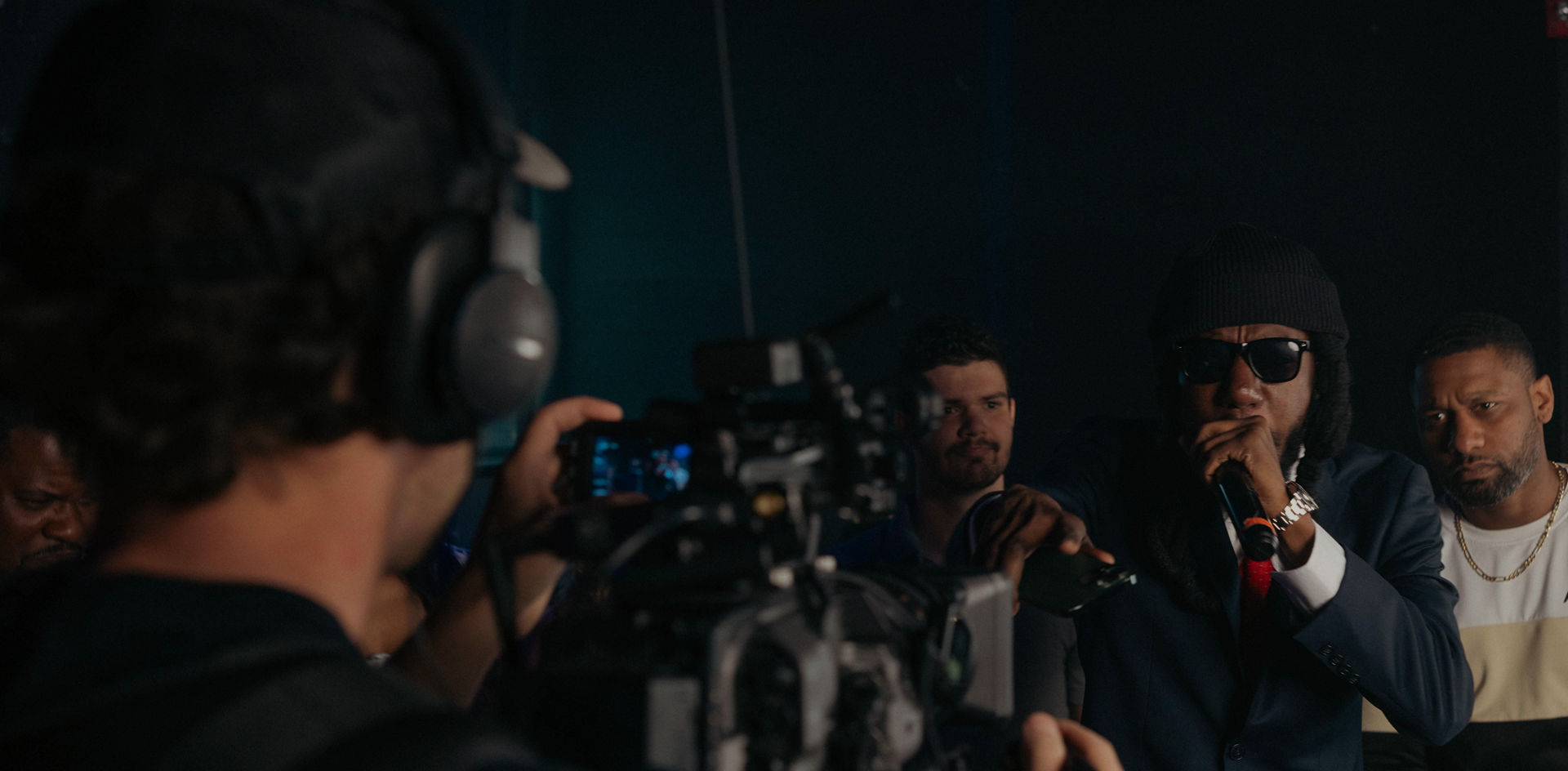
At Craft Creative, we recently conducted a test to better understand lens distortion, how it affects images, and the ways it can be corrected.
Lens distortion refers to the way a camera lens can alter the shape or proportions of objects in an image. It is most noticeable when straight lines appear curved, particularly near the edges of a photograph. Distortion can be an unintended optical effect or an intentional creative choice.
There are two important concepts to understand: optical distortion and perspective distortion.
Optical distortion is caused by the design and optical characteristics of the lens. The most common types are barrel distortion, where straight lines appear to curve outward, and pincushion distortion, where they curve inward. Some lenses may also produce a combination of both, known as moustache distortion. These effects can often be corrected using lens profiles or manual adjustments in photo-editing software.
Perspective distortion, in contrast, is caused by the camera's position and angle relative to the subject. For example, when photographing a building from close to the ground, vertical lines may appear to converge. Similarly, objects closer to the camera can appear disproportionately larger than objects farther away. Perspective distortion can be reduced by changing the camera position and can often be corrected in post-production using perspective or geometry tools.
As part of our test, we used lenses with focal lengths ranging from 16mm to 300mm to explore how different focal lengths affect the appearance of an image.
One of the key observations was the difference in field of view. Wider focal lengths capture a broader area of a scene, while longer focal lengths capture a narrower field of view. Longer focal lengths can also create a more compressed appearance, making the perceived distance between foreground and background elements seem smaller. However, this compression is primarily related to camera position. When using a longer focal length to maintain the same subject framing, photographers generally move farther away from the subject, changing the perspective.
It is also important to understand that focal length alone does not determine the amount of optical distortion. This depends on the lens's optical design, and distortion can vary significantly between different lenses, even when they have the same focal length.
Our test also highlighted how different lenses serve different photographic purposes.
A wide-angle lens is useful for capturing expansive landscapes, interiors, and architecture. It offers a wider field of view, making it easier to include more of a scene in the frame. However, some wide-angle lenses exhibit noticeable barrel distortion, while shooting close to a subject can exaggerate the apparent size of nearby objects.
A telephoto lens is better suited to photographing distant subjects, wildlife, sports, and details that are difficult to capture from close range. Its narrower field of view allows photographers to isolate subjects, and when used from a greater distance, it can create a compressed perspective that makes foreground and background elements appear closer together.
In conclusion, understanding the difference between optical and perspective distortion is essential to making informed decisions about lens selection and camera positioning. The right lens depends on the subject, shooting distance, composition, and desired visual effect. By understanding how focal length, perspective, and lens characteristics influence an image, photographers and filmmakers can make more deliberate creative choices and produce images that communicate their intended story with greater clarity and accuracy.



 Video Production