Most safety training still lives in binders nobody reads and slide decks nobody remembers. Incidents happen anyway, audits get flagged, and new hires forget the one procedure that actually keeps them safe. Video changes that equation, not because it looks more polished, but because it changes what people actually do on the job.
Why Video Works for Safety and Compliance Training
A written policy tells someone what to do. A video shows them, and showing beats telling almost every time a task involves a physical space, a piece of equipment, or a split-second decision.
Video also solves problems that manuals cannot:
-
Consistency. Every shift, every location, and every new hire sees the same demonstration, delivered the same way, every time.
-
Accessibility. Captions and translated voiceover reach workers who read below the training's grade level or speak a different first language, without rewriting the whole program.
-
Proof. A completed video paired with a quiz and a timestamp holds up better in an audit or after an incident than a signature on a sign-in sheet.
-
Retention. People remember what they watched happen far longer than what they read in a policy paragraph.
None of this replaces hands-on training. It gives that training a stronger foundation to build on.
How the Best Compliance Training Videos Get Made
Good safety videos are not stock footage with a voiceover added on top. They follow a process:
-
Start with the regulation and the risk, not the script: EHS teams, legal, and compliance officers should define exactly what the video needs to prove before writing anything.
-
Write for the floor, not the boardroom: Plain language and real terminology beat corporate jargon every time.
-
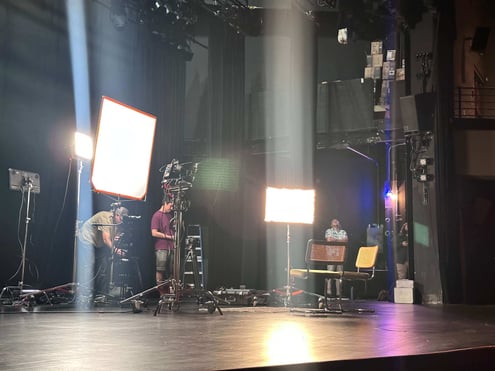
Film where the work actually happens: Real equipment and real environments build more trust than a stand-in set.
-
Keep it short and scenario-based: A five- to eight-minute module built around one task or one hazard gets watched. A thirty-minute lecture gets skipped through.
-
Build in accessibility from the start: Captions, translated audio, and clean transcripts belong in the original production, not bolted on afterward.
-
Plan for updates: Regulations change and equipment changes. A video that cannot be revised quickly becomes outdated fast.
This is where the production side matters as much as the compliance side. An experienced video production company knows how to shoot around a live operation, get the right legal sign-off, and still deliver something workers want to watch instead of endure.
Who These Videos Actually Help
Safety and compliance training videos serve two audiences at once.
The people watching them: new hires learning a procedure for the first time, frontline crews needing a refresher, and supervisors coaching a correction on the floor.
The people building and defending the program: EHS managers who need a documented, repeatable training record, HR and L&D teams standardizing onboarding across multiple sites, and legal or risk teams working to lower liability exposure.
Industries with the most to gain include manufacturing, construction, healthcare, warehousing and logistics, oil and gas, and food service. Anywhere OSHA or a similar body requires documented training, and anywhere a mistake has real consequences, video earns its place in the program.
The Bottom Line
Safety and compliance training videos work because they meet people where their attention actually lives, in something they can watch, follow, and remember, rather than something they sign and file away. Getting them right takes more than a camera. It takes a production partner who understands storytelling and the regulatory reality behind the request in equal measure.



 Video Production